TokyoEssayUnderstanding the city
Why Tokyo has no centre
Start with the journeys you will repeat.
Tokyo has several centres doing different jobs. See how railways and districts grew together, then choose a base around journeys you will repeat: two museum days or four evenings out.
◆The thesis, drawn
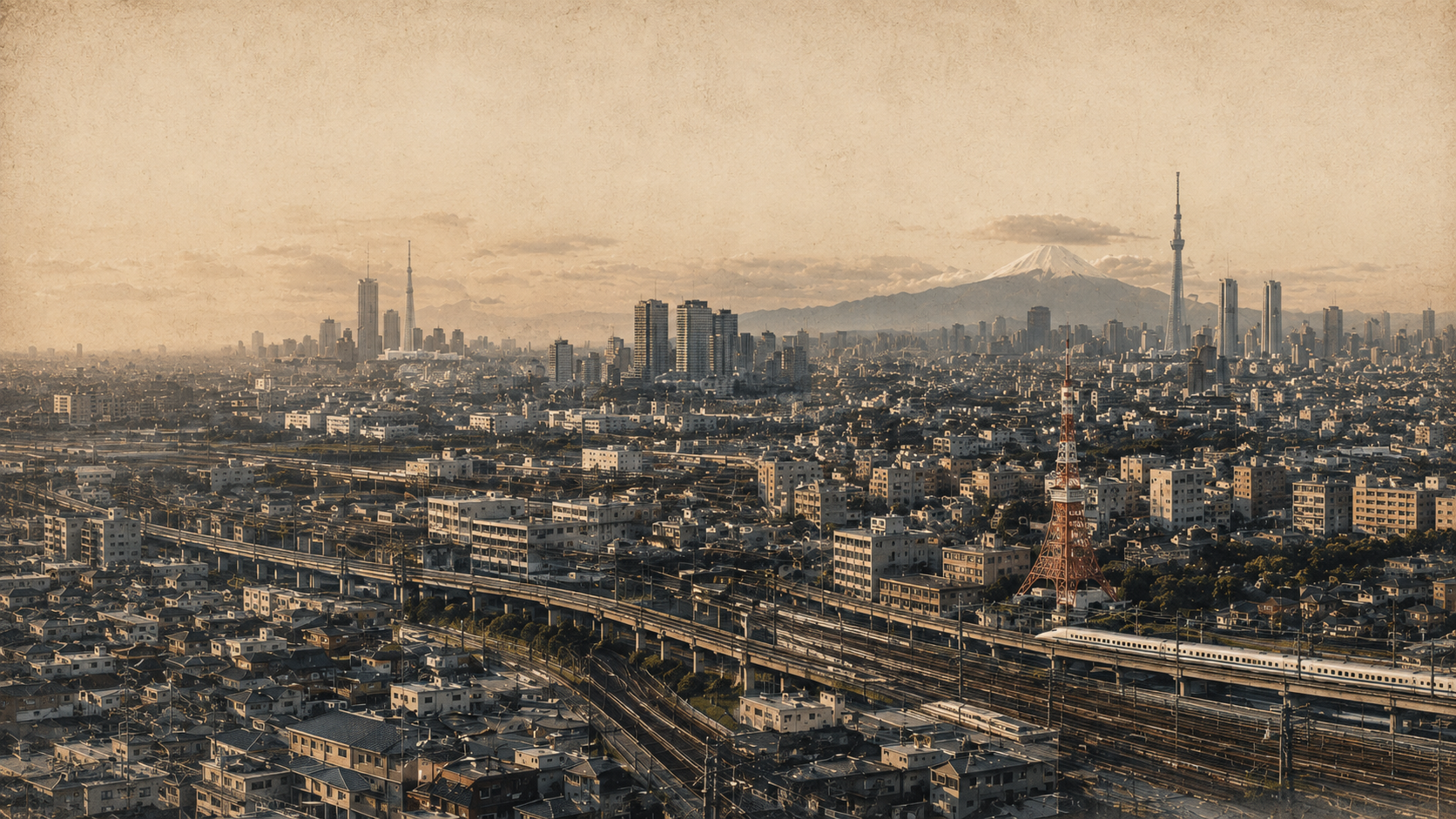
FOW / TOKYO FIELD NOTES
Four days, more than one centre
SHINJUKU
Shinjuku · western days
For western plans and many rail choices. Check the station, gate and final return before the hotel name. Park Hyatt is a separate paid stay/dining choice.
Explore the Atlas ↗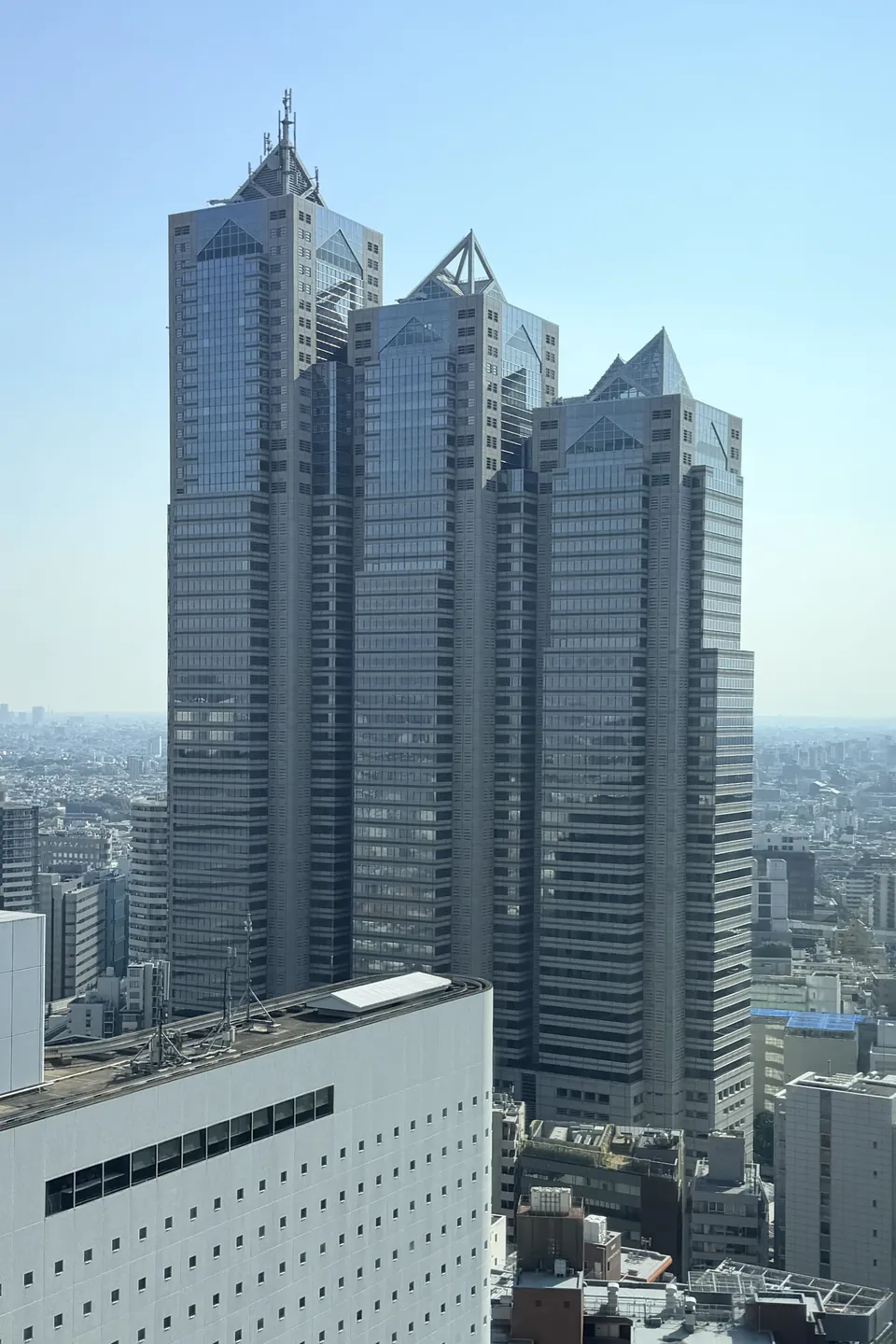
Image info
Akonnchiroll · 2026-05-16 · CC-BY-SA-4.0 · resized and cropped
Several centres shaped by railways
Marunouchi beside Tokyo Station centres business and intercity rail. Shinjuku and Shibuya gather western railway journeys, shops and evenings out; Ueno clusters parks and museums, while Ginza concentrates department stores, galleries and Kabukiza. A traveller’s centre emerges from the activities they return for, rather than the middle of a map.
Shinjuku makes that process tangible. After the station opened in 1885, shops, department stores and theatres developed in the east; postwar Kabukicho and redevelopment of the western Yodobashi waterworks added other districts. Suburban railways connected into a terminal that became a destination in its own right.
Tokyo’s 1982 and 1986 plans described a multi-centre structure distributing functions among subcentres including Shinjuku, Shibuya and Ikebukuro. That is why, for travel, Tokyo reads better as several bases; it does not mean the city lacks administrative or economic centres.
Sources
- Reorganization into a multi-center cityTokyo Metropolitan Government · as of 2026-09-29
- Shinjuku City · how the station districts developedShinjuku City · as of 2026-10-19
- Tokyo Station and MarunouchiTokyo Convention & Visitors Bureau (GO TOKYO) · as of 2026-09-29
- ShinjukuTokyo Convention & Visitors Bureau (GO TOKYO) · as of 2026-09-29
- UenoTokyo Convention & Visitors Bureau (GO TOKYO) · as of 2026-09-29
- GinzaTokyo Convention & Visitors Bureau (GO TOKYO) · as of 2026-09-29
Two western and two eastern starting points
For fashion and music, Shibuya brings PARCO’s design/game shops, Spain-zaka performances and record bars into different parts of a day. For western towers, the government observatory and eastern department stores or Suehirotei, Shinjuku is the more direct base. Both are western hubs, with different reasons to return.
For consecutive museum days, Ueno Park places Tokyo National Museum and the National Museum of Western Art in one area, with Ameyoko’s food and market goods offering a different outing to the south. For an onward shinkansen morning, compare Tokyo Station. Marunouchi west of the red-brick building and Yaesu to the east are different approaches with luggage.
Ginza suits days spent among department stores, galleries and Kabukiza. Airport access changes with whether the address is near Ginza, Higashi-Ginza or Yurakucho. Whichever base you choose, connect the entrance to the specific exit after choosing the station name.
Sources
- ShibuyaTokyo Convention & Visitors Bureau (GO TOKYO) · as of 2026-09-29
- ShinjukuTokyo Convention & Visitors Bureau (GO TOKYO) · as of 2026-09-29
- UenoTokyo Convention & Visitors Bureau (GO TOKYO) · as of 2026-09-29
- Tokyo Station and MarunouchiTokyo Convention & Visitors Bureau (GO TOKYO) · as of 2026-09-29
- GinzaTokyo Convention & Visitors Bureau (GO TOKYO) · as of 2026-09-29
Count the evenings you will repeat
Suppose four evenings are in Shinjuku and you stay near Tokyo Station, returning on the Marunouchi Line each time. Metro’s published 18-minute, ¥209 IC one-way example makes eight rides: 144 minutes and ¥1,672. That is an authored four-round-trip example for ride time and fares only. Add approaches and waits; a Shinjuku hotel within walking reach of the appointments could remove those repeated rides.
If two Ueno museums lead the itinerary and you arrive/depart through Narita, weigh the Keisei-Ueno connection together with museum access. A western base loses its advantage when western evenings do not recur. The tool below narrows those itinerary and airport-transfer preferences; hotel prices and final trains still need their own check.
Sources
- Tokyo Metro · April 2026 route examplesTokyo Metro · as of 2026-10-19
- UenoTokyo Convention & Visitors Bureau (GO TOKYO) · as of 2026-09-29
- Skyliner ticket purchaseKeisei · as of 2026-09-29
- Narita ExpressJR East · as of 2026-09-29
Bases that fit your plansStay finder
The default leaves focus and airport undecided and allows transfers. Changing conditions requires JavaScript.
Five bases
- ShinjukuFits western days and evenings in Shinjuku. Match the hotel entrance to the east, west or south side of the station.Matches
- UenoFits park, museum and Ameyoko days. Keisei-Ueno, the Skyliner terminus, and JR Ueno are distinct stations.Matches
- Tokyo StationFits onward intercity rail. Check whether the accommodation is on the Marunouchi west or Yaesu east side.Matches
- ShibuyaConsider it for fashion, music and plans around Shibuya. Check the specific line and the exit nearest the accommodation.Matches
- GinzaFits shopping, galleries and Kabukiza. Distinguish Ginza, Higashi-Ginza and Yurakucho before choosing an airport route.Matches
How to read thisBases that match: 5. Check the accommodation entrance and your date’s services separately.
Official access facts and FOW’s criteria
Compare five bases by your repeated plans, arrival airport and willingness to change trains.
- Destination
- Japan
- Commercial state
- none
- Traveler context
- the same result for everyone
Sources & freshness
Last update 2026-10-02
Sources
FOW selects and writes from operators’ and public bodies’ official sources. Hours, fares and exhibitions change, so check each place’s official information before you go.