Shinjuku / LENS
OLD / NEW EAST
Bronze lions, a timber theatre, an Art Deco department store and a concrete bookshop: distinguish the older east through surviving materials and what you can do there.
WHY · When each still-working institution took root here
LENS · Where the lens sits
Where are this lens’s places, and can one walk tie them together?
Close together · one quarter (East) · the farthest two about 7 min on foot
Places in this lens
- Hanazono Shrine — 1624–44 · moved here · East
- Shinjuku Suehirotei — 1897 · timber hall 1946 · East
- Isetan Shinjuku — 1933 · Art Deco store · East
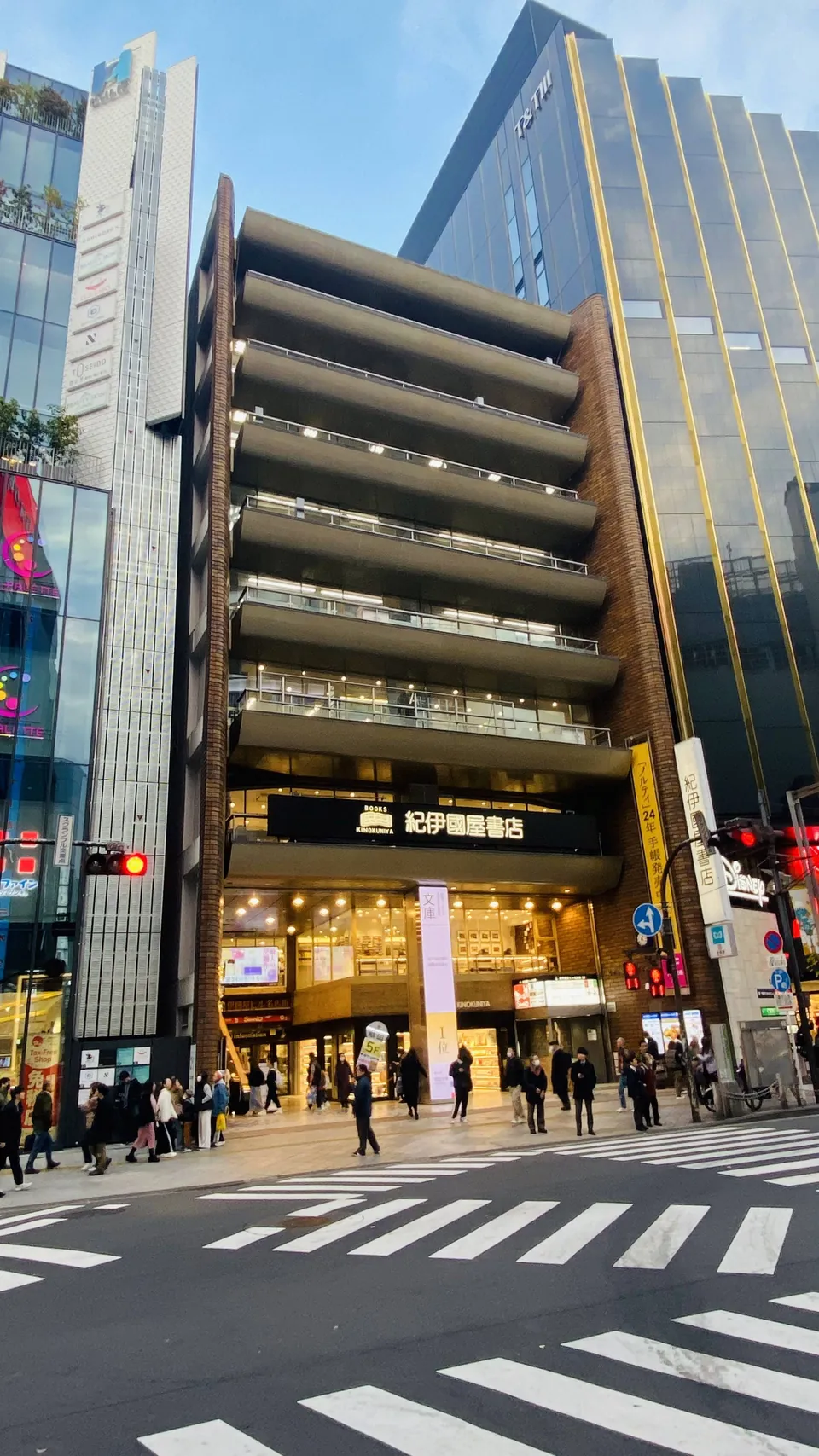
- Kinokuniya Shinjuku Main Store — 1927 · building 1964 · East
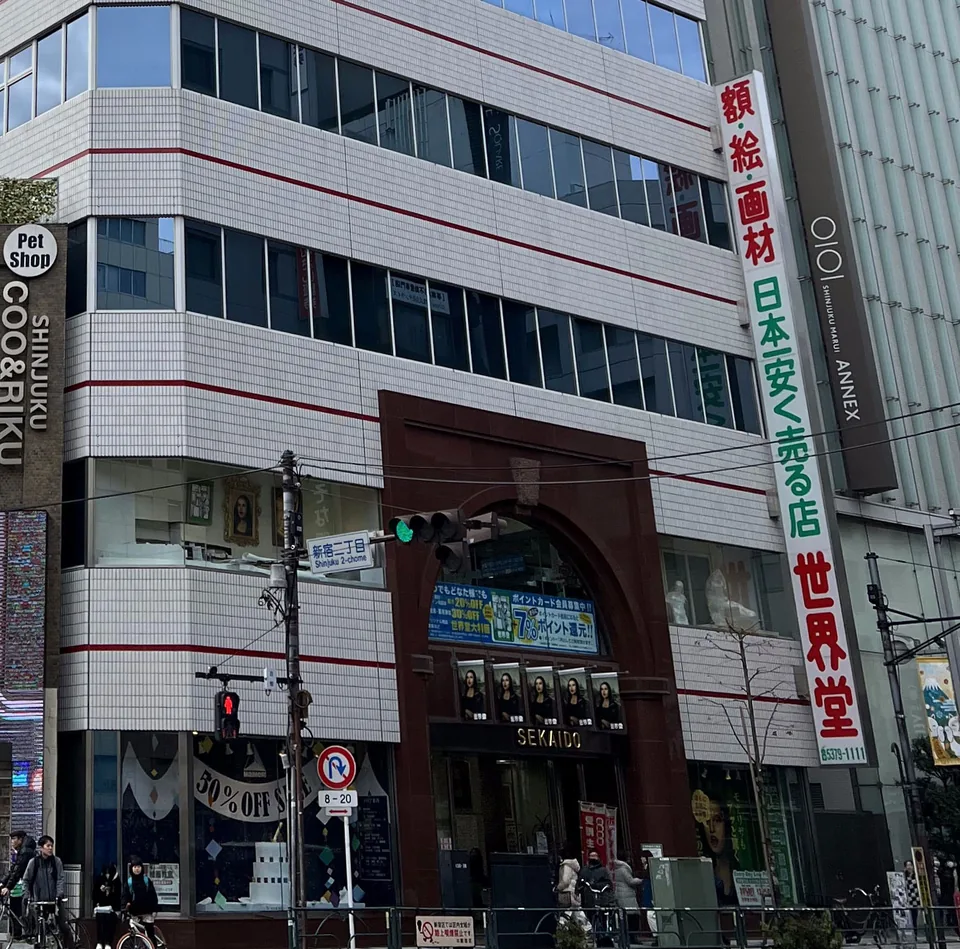
- Sekaido Shinjuku Main Store — 1940 · as a frame shop · East
Walks through this lens
- From objects to the garden — 3 of the 5 places in this lens · not on this walk: Hanazono Shrine, Suehirotei
Walking times are estimates from OpenStreetMap’s surface street network at 80 m/min. They exclude underpasses, decks, station concourses, signal waits, slopes and movement inside buildings. Straight-line links are not walking routes; follow on-site signs even where a time is shown. Shaded quarters show the approximate areas around FOW’s selected places.
Map data: © OpenStreetMap contributors (ODbL) · Quarter names and character: FOW · Town names: each place’s official address · Walking: computed by FOW · 2026-10-16
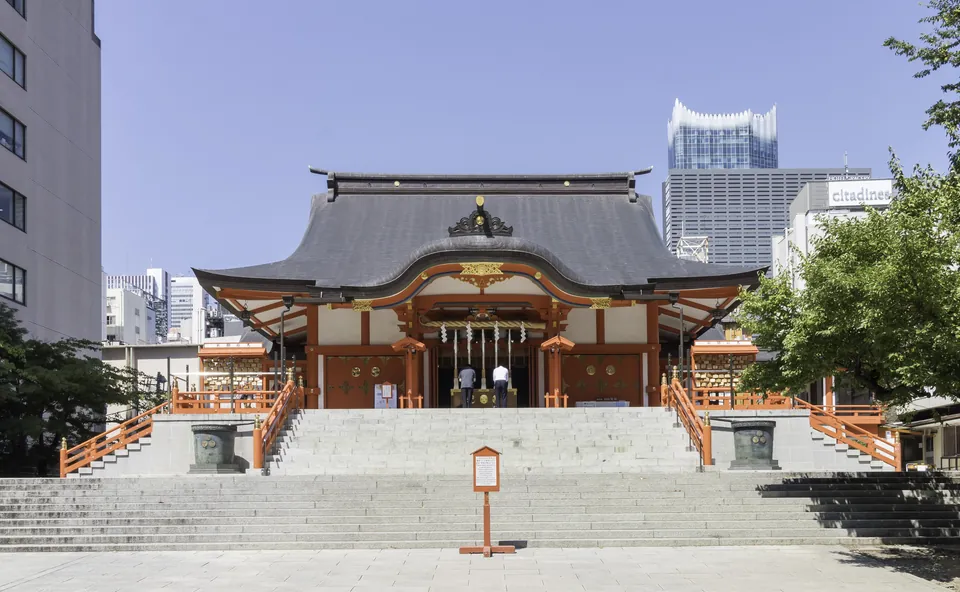
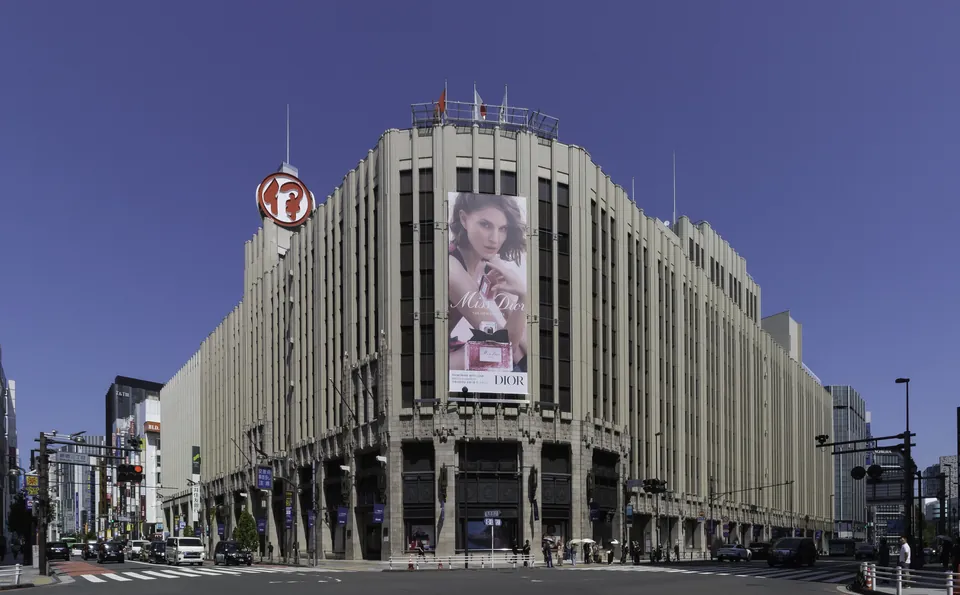
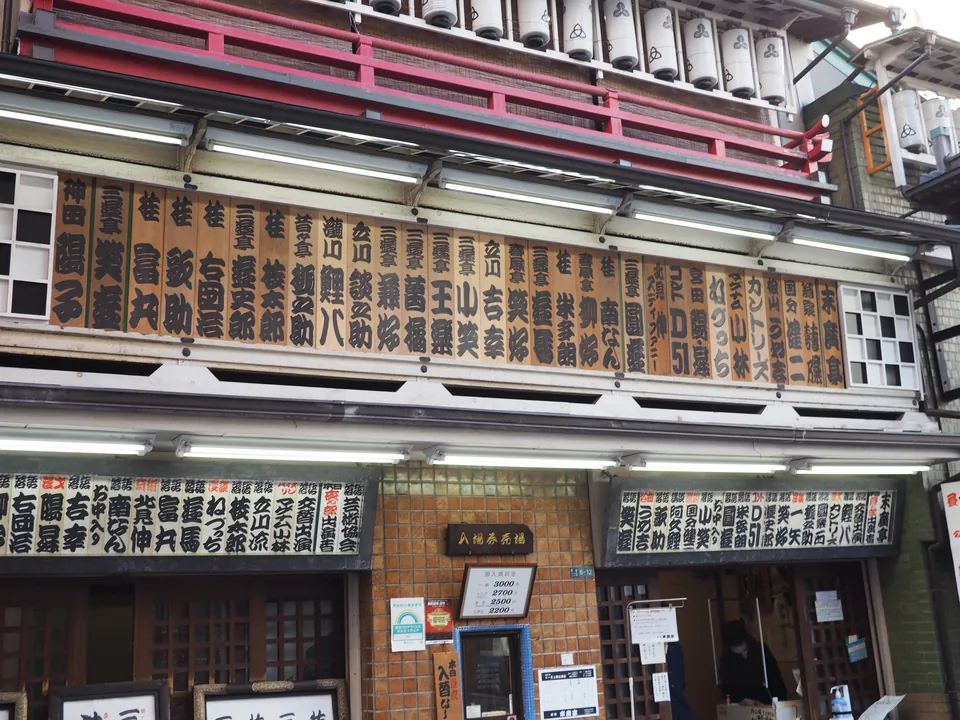
Image info
Kakidai · 2025-09 · CC-BY-SA-4.0 · resized and cropped
OLD / NEW EAST
Hanazono Shrine
A former post-town guardian with a theatre history:1821 bronze lions, a performing-arts shrine and a miniature Fuji remain among the commercial streets.
Continue with this place ↗For Suehirotei, choose the performance session first and use the time beforehand for a nearby shop. On a shopping day, start instead with the place that has what you want: Isetan, Kinokuniya or Sekaido.
A shrine’s lions and a performer’s gestures
Hanazono’s bronze lions were donated by merchants in 1821, making them older than the present postwar main sanctuary. The small Geino Asama shrine and Keiko Fuji song monument give the area’s performing-arts connection specific places within the grounds. At Suehirotei, one seated storyteller turns and changes voice to become several characters. Japanese wordplay may be hard to follow, but posture and variety acts such as papercutting offer other ways into the programme. Worship and events take priority at the shrine; the theatre asks you to make time for a session.
Buildings with objects still at work
Isetan’s stone and bronze ornament, vertical piers and corner towers give the street an Art Deco face. Inside, Suzukake’s bell-shaped monaka and small enmochi set different rice textures around azuki filling. At Kinokuniya, Kunio Maekawa’s curved tile walls and raised concrete canopy connect the forecourt with the lane behind. The 5F art shelves and 7F foreign-language shelves provide a purpose after looking at the building. Choose between a finished object and a book before treating the two stores as interchangeable browsing stops.
One choice before the performance
Sekaido sells the means to make a picture: matching a water-filled Pentel Vistage brush with paint and watercolour paper is a different task from choosing finished tableware. For a performance day, fix Suehirotei’s session first and choose one shop beforehand. Ordinary adult admission is ¥3,500, with individuals using unreserved walk-up seating. Choose an available central chair or side tatami seat. On a shopping day, see the exterior and leave a full performance for another visit rather than treating it as a few-minute stop.
A full performance is not part of a short walk. Shrine events come first.
Sources · image info
- 花園神社Shinjuku Convention & Visitors Bureau · as of 2026-09-29
- Hanazono-jinja Shrine (Shinjuku Ward, Tokyo)Japan Travel And Tourism Association · as of 2026-09-29
- 新宿末廣亭 ご案内Shinjuku Suehirotei · as of 2026-09-29
- 定席 末廣亭Rakugo Association · as of 2026-09-29
- 営業時間・アクセス | 伊勢丹 新宿店Isetan Mitsukoshi · as of 2026-09-29
- 紀伊國屋書店 新宿本店Kinokuniya Company Ltd. · as of 2026-09-29
- 世界堂 新宿本店Sekaido · as of 2026-09-29
- Hanazono Shrine’s bronze lionsShinjuku Historical Museum / Shinjuku Foundation for Creation of Future · as of 2026-10-19
- Shinjuku Fuji at Hanazono ShrineShinjuku Convention & Visitors Bureau · as of 2026-10-19
- Suehirotei — current admission and variety programmeShinjuku Suehirotei · as of 2026-10-19
- Suzukake — rice, azuki and bamboo packagingIsetan Shinjuku · as of 2026-10-19
- Isetan’s historic Art Deco main buildingTokyo Metropolitan Government With! Tokyo Rekiken Project · as of 2026-10-19
- Isetan main building: the BELCA long-life awardBuilding and Equipment Life Cycle Association · as of 2026-10-19
- Kinokuniya Building — architecture and original tilesBooks Kinokuniya · as of 2026-10-19
- Pentel Vistage — medium water brushSekaido · as of 2026-10-19
- Kinokuniya · Shinjuku main-store floor guideKinokuniya · as of 2026-10-19
- Hanazono Shrine — Kakidai · 2025-09 · CC-BY-SA-4.0 · resized and cropped
- Suehirotei — nakashi from Chofu, Tokyo, JAPAN · 2021-11-03 · CC-BY-SA-2.0 · resized and cropped
- Isetan — Kakidai · 2025-08 · CC-BY-SA-4.0 · resized and cropped
- Kinokuniya — ブラ松 · 2023-12-27 · CC-BY-SA-4.0 · resized and cropped
- Sekaido — Asanagi · 2024-01-28 · CC0-1.0 · resized and cropped


