FOW TRAVELTOKYO / Shibuya · Harajuku · Yoyogi / SEE & DO / CONTENTS
Shibuya · Harajuku · Yoyogi / WAY
West of the park: architecture and coffee
Walk from the shrine’s Jomon remains and woods to Ito’s tiled roofs, Ban’s coloured-glass building and Yoyogi Park. Add play or coffee if you have time.
Compare shrine woods, Ito’s three forms and Ban’s glass boundary, then continue to the park. Play and coffee remain optional.
Sequence only · entrances and walking links unconfirmed · No total walking time · some legs show straight-line distance only
WAY · The walk on the ground
In what order, and where can the walk fork or shorten?
6 stops · starts near Yoyogi-Hachiman (about 260 m in a straight line) · No total walking time · some legs show straight-line distance only
Stops · the same numbers as the sequence stripOptional stopDashes: street-network reference · entrances and walking links unconfirmedStraight-line link · not a walking routeWhere FOW’s chosen places gather · not an administrative boundaryStation
Stops · the same numbers as the sequence strip
1Yoyogi Hachimangu→ On foot, about 1 min / 30 m · Street connection data is missing here; only the place sequence is shown.
2Yoyogi-Hachiman — THE TOKYO TOILET→ About 190 m in a straight line · not a walking time · Editorial travel route along the street network. Check on-site signs for entrances, level changes and current restrictions.
3Haru-no-Ogawa Community Park — THE TOKYO TOILET→ On foot, about 2 min / 170 m · Editorial travel route along the street network. Check on-site signs for entrances, level changes and current restrictions.
4Haru-no-Ogawa Playpark — Optional stop→ On foot, about 1 min / 110 m · Editorial travel route along the street network. Check on-site signs for entrances, level changes and current restrictions.
5Little Nap COFFEE STAND — Optional stop→ About 10 min / 790m to the park reference point; not gate access · Editorial travel route along the street network. Check on-site signs for entrances, level changes and current restrictions.
Total walking: No total walking time · some legs show straight-line distance only
Walking times are estimates from OpenStreetMap’s surface street network at 80 m/min. They exclude underpasses, decks, station concourses, signal waits, slopes and movement inside buildings. Straight-line links are not walking routes; follow on-site signs even where a time is shown. Shaded quarters show the approximate areas around FOW’s selected places.
Play and coffee are optional. Check Thursday and seasonal closures and the weather. Use pedestrian navigation between the toilets, and choose West Gate rather than the park pin when entering Yoyogi Park. Follow current glass-toilet instructions and park signs.
If a required stop does not fit, choose individual Places. Optional stops may be omitted.
Begin with the shrine's trees and hillside
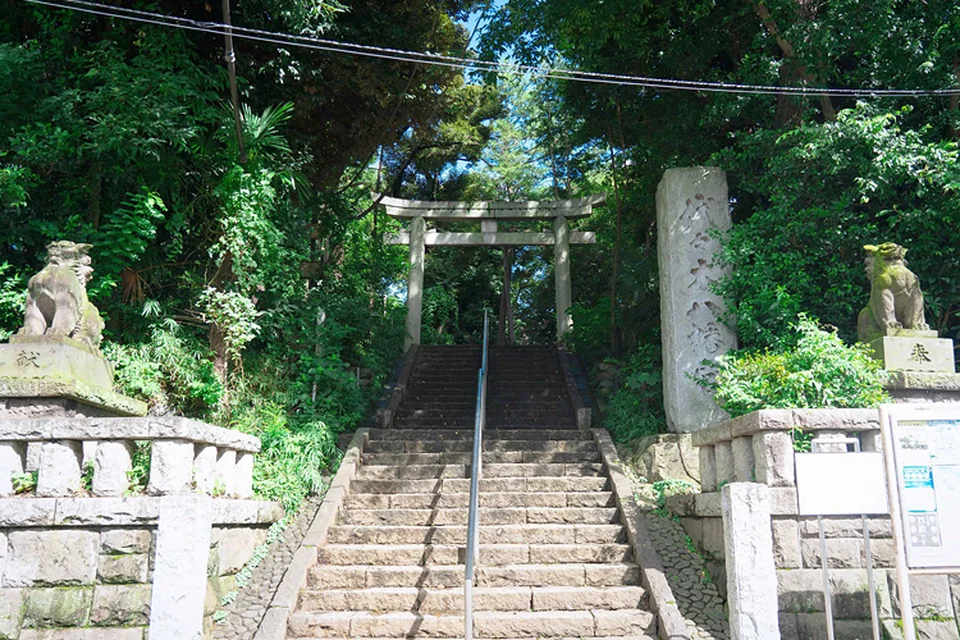
From Yoyogi-Hachiman Station or the Uehara-side exit of Yoyogi-koen, head to the shrine at 5-1-1 Yoyogi, about five minutes on the shrine’s directions. Climb the Yamate-dori steps into chinquapin, camphor, zelkova and ginkgo trees. Yoyogi Hachimangu traces its founding to 1212, but the hillside holds a much older story: excavation in 1950 uncovered roughly 5,000-year-old Jomon remains. Look for the reconstructed dwelling and material beside the kaguraden as well as the worship buildings.
Allow thirty to forty-five minutes, then return down the steps to Ito’s toilet between the woods and road. The office opens 09:00–17:00 and prayer reception ends at 16:30. Check separate opening arrangements if a particular display is essential.
From three roofs to coloured glass
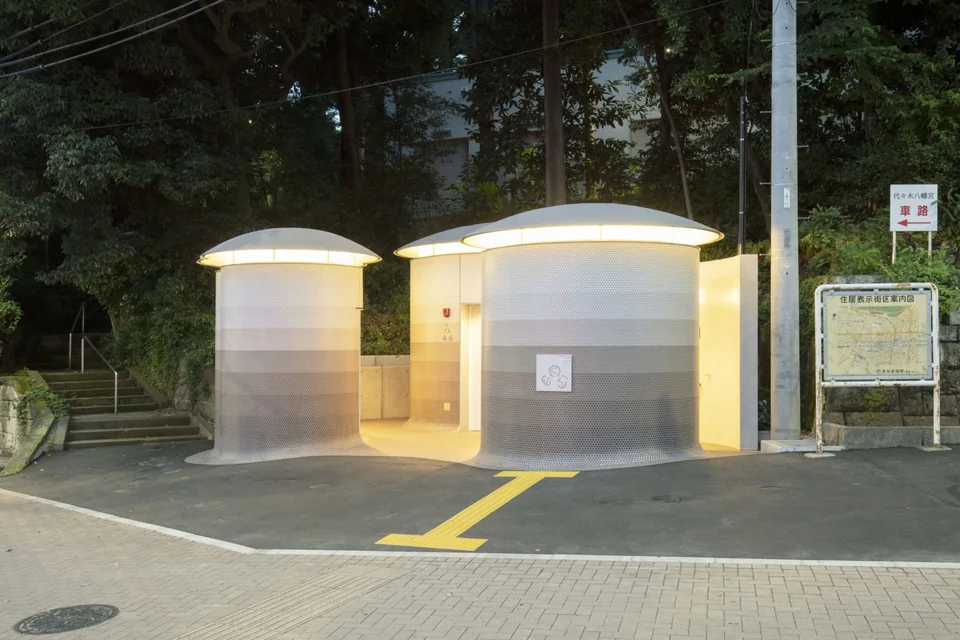
Ito’s Three Mushrooms is at 5-1-2 Yoyogi. You can see through the gaps between three rounded roofs, with daylight entering below their edges. Look closer at the changing colours of the small round tiles. Spend five to ten minutes outside without blocking entrances, then head to Haru-no-Ogawa Community Park at 5-68-1.
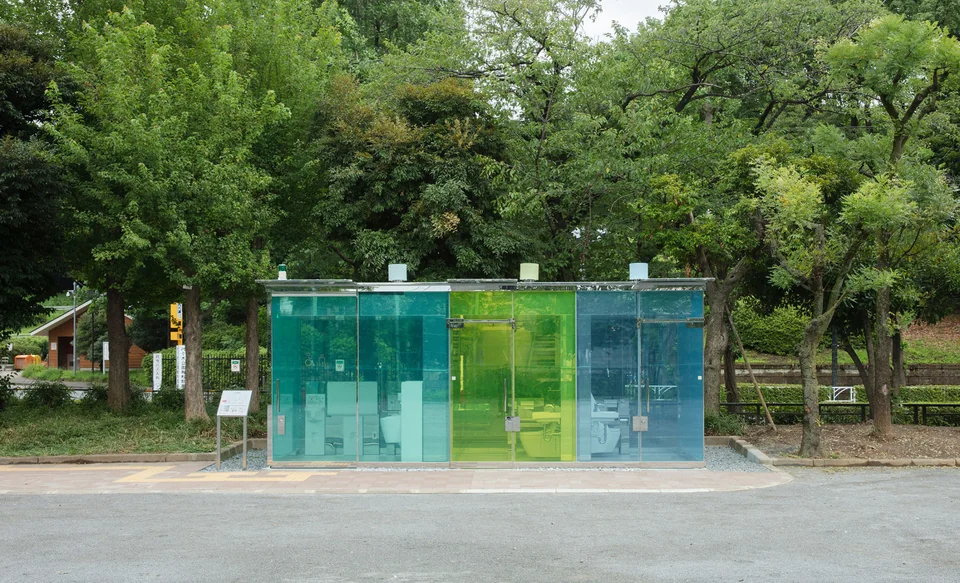
Ban’s coloured-glass boxes make a useful contrast. The sites are about 190 m apart in a straight line; follow pedestrian directions for the actual street route. Ito leaves gaps between buildings, while Ban designed walls that change from transparent when vacant to opaque when locked. Follow on-site use and maintenance notices rather than make the trip depend on seeing the glass switch. Its colour and box-like form still contrast with Ito’s open roofs.
Play and coffee are optional
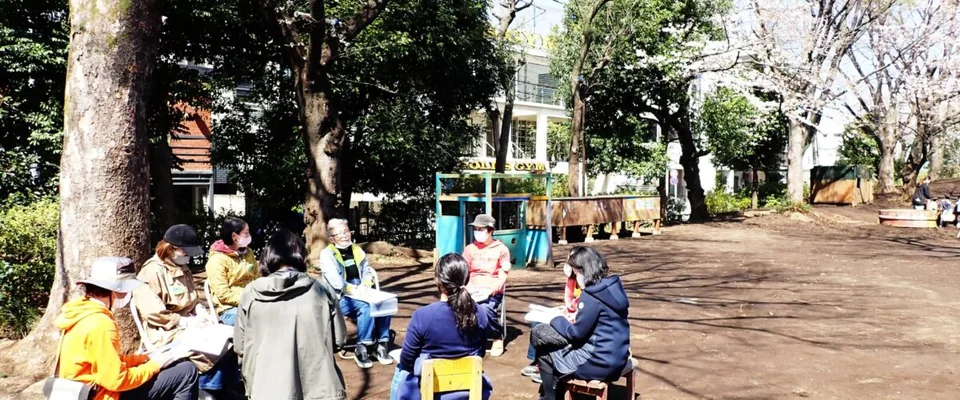
With children, make the nearby playpark your longer stop. Earth, water, ropes, woodworking tools and a hearth let children make their own play, supported by leaders who inspect equipment and help them join in. It is free, with no age, residence, booking or registration requirement. Staffed play runs 10:00–17:00, except Thursdays and summer/winter breaks; at other times it remains an ordinary park. Bring spare clothes and shoes, a bag for wet things, snacks, towels and nappies. Strong wind can restrict tools and fire.
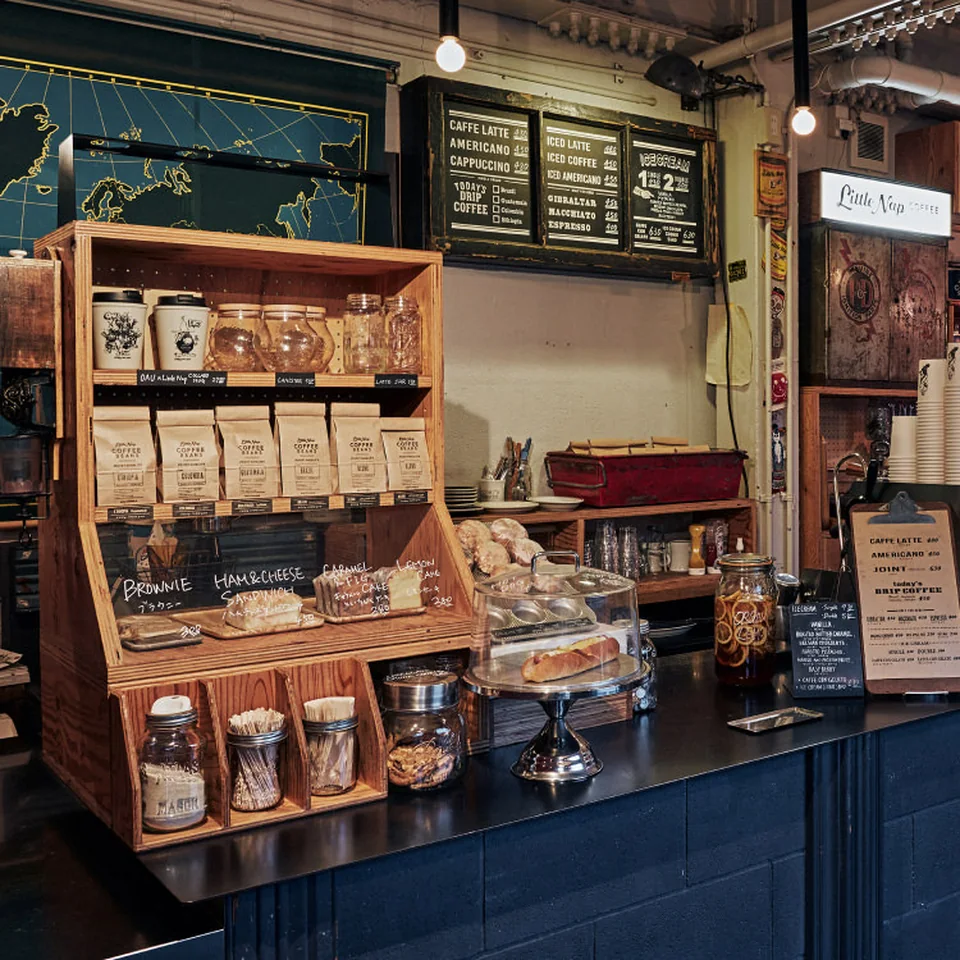
For coffee, Little Nap COFFEE STAND is at 5-65-4 Yoyogi, normally 09:00–19:00. A 2018 visit documents its short house espresso and milk Gibraltar: small drinks before continuing on foot. Check the order board for prices. Skip coffee if the children are absorbed in play or rain sets in; head back towards Yoyogi-Hachiman or Yoyogi-koen if ending the walk.
Finish inside the park from the west
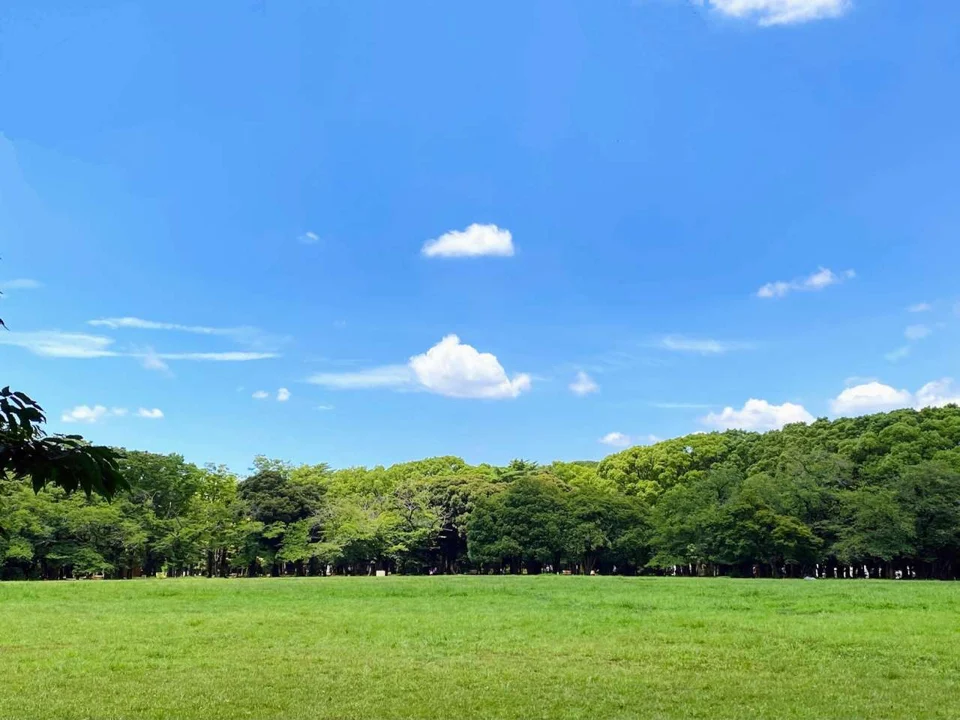
Follow signs from the Little Nap side to Yoyogi Park’s West Gate. Set your destination to West Gate rather than the park pin. Do not use the map’s approximately ten-minute/790 m Little Nap–park note as an estimate for reaching an entrance; allow time to enter and walk inside. Once inside, follow woodland paths towards the grass and fountain pond, then Harajuku Gate if returning that way. Leave time after the gate to reach the station.
The park is free. Allow roughly 1½–2½ hours for an unhurried shrine, architecture and park visit, adding forty-five to ninety minutes for play. Treat that as a loose outing budget with time at the stops, rather than a tight walking timetable. For a shorter outing, omit play and coffee and take a brief woodland walk from West Gate.
Visit details
Start at Yoyogi-Hachiman/Yoyogi-koen, enter the park at West Gate and finish towards Harajuku Gate. Allow about 1½–2½ hours with visits but without play. The park marker is not an entrance; follow West Gate signs.
Visit conditions
No staffed play Thursdays or during seasonal breaks. Do not make the visit depend on seeing Ban’s glass switch; follow on-site instructions.
Between stops · leg notes
Yoyogi Hachimangu → Yoyogi-Hachiman — THE TOKYO TOILET
On foot, about 1 min / 30 m
Yoyogi-Hachiman — THE TOKYO TOILET → Haru-no-Ogawa Community Park — THE TOKYO TOILET
About 190 m in a straight line · not a walking time
Haru-no-Ogawa Community Park — THE TOKYO TOILET → Haru-no-Ogawa Playpark
On foot, about 2 min / 170 m
Haru-no-Ogawa Playpark → Little Nap COFFEE STAND
On foot, about 1 min / 110 m
Little Nap COFFEE STAND → Yoyogi Park
About 10 min / 790m to the park reference point; not gate access